
Indian Makhana (Fox Nuts) Exporter & Supplier
YUGA EXIM sources and exports export-grade Indian Phool Makhana (Popped Lotus Seeds / Gorgon Nuts) for global wholesale, food brands, and retail chains. Harvested from fertile wetlands, mechanically graded, sun-cured, and nitrogen-packed for international markets.
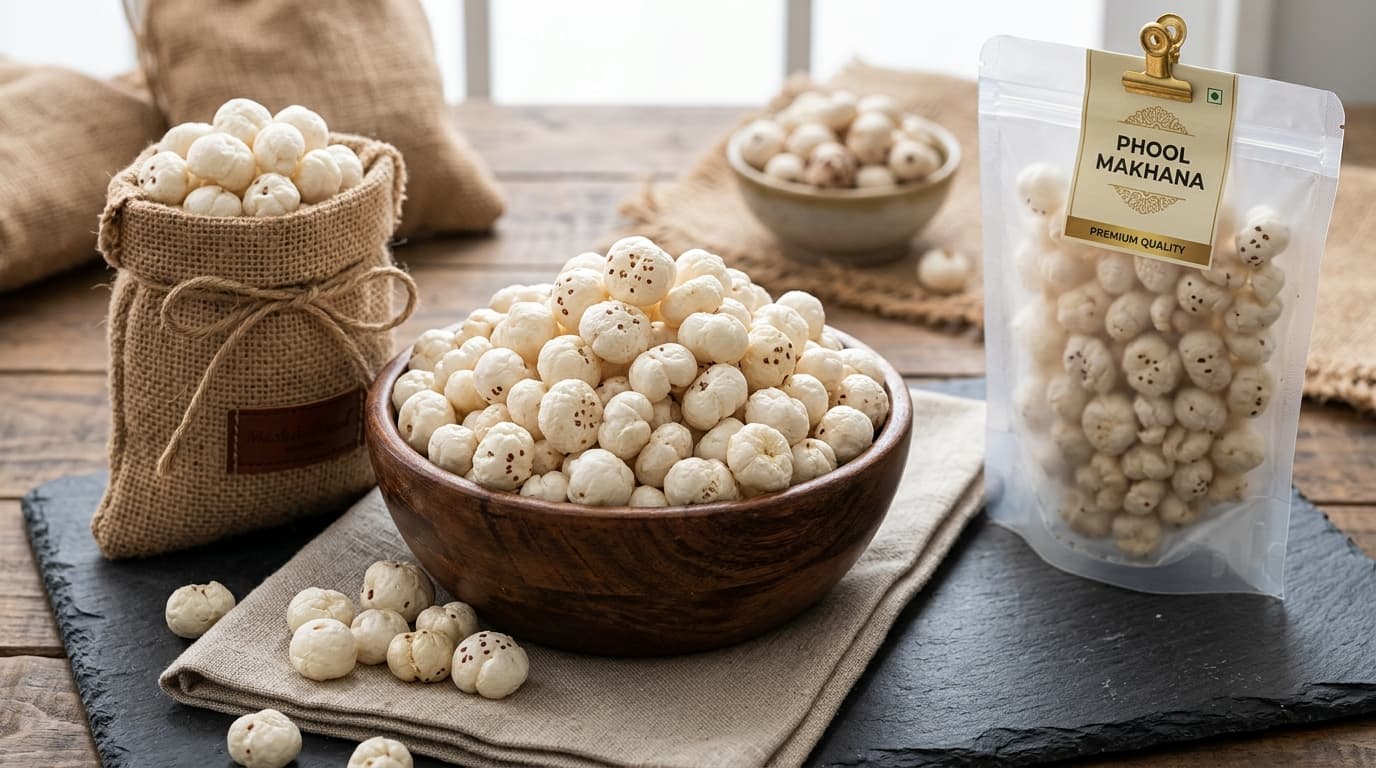
Pristine Ivory White Phool Makhana for International Sourcing
India accounts for over 85% of global Makhana production. Revered as an ancient nutrient-dense superfood, popped fox nuts are naturally gluten-free, rich in high-quality plant protein, calcium, magnesium, and essential antioxidants with a very low glycemic index.
At YUGA EXIM, we work with primary processing units in the heart of the wetland cultivation belts. Every consignment undergoes multiple stages of pneumatic de-stoning, size-grading sieves, manual hand-sorting to eliminate hard black shells, and dehumidified vacuum packing to guarantee unbroken, crisp delivery worldwide.
Calibrated Sizes & Commercial Varieties
We supply specific suta-calibrated grades to match buyer specifications for retail snacking, cereal blends, and bulk culinary applications.
Jumbo 6+ Suta (Hand-Picked King)
Extra-large, snow-white, perfectly puffed round kernels with maximum crunch. Meticulously hand-sorted for luxury retail snack brands, premium gifting, and health food superstores.
Grade 5+ Suta (Commercial Export)
Uniform size, high pop ratio, and crisp texture. The benchmark global export grade preferred by international food distributors, snack manufacturers, and private-label retail lines.
Grade 4+ Suta (Clean Standard)
Crispy and light, ideal for commercial processing, blending into nutritious breakfast cereals, confectionery, gluten-free makhana flour, and ready-to-cook meal bases.
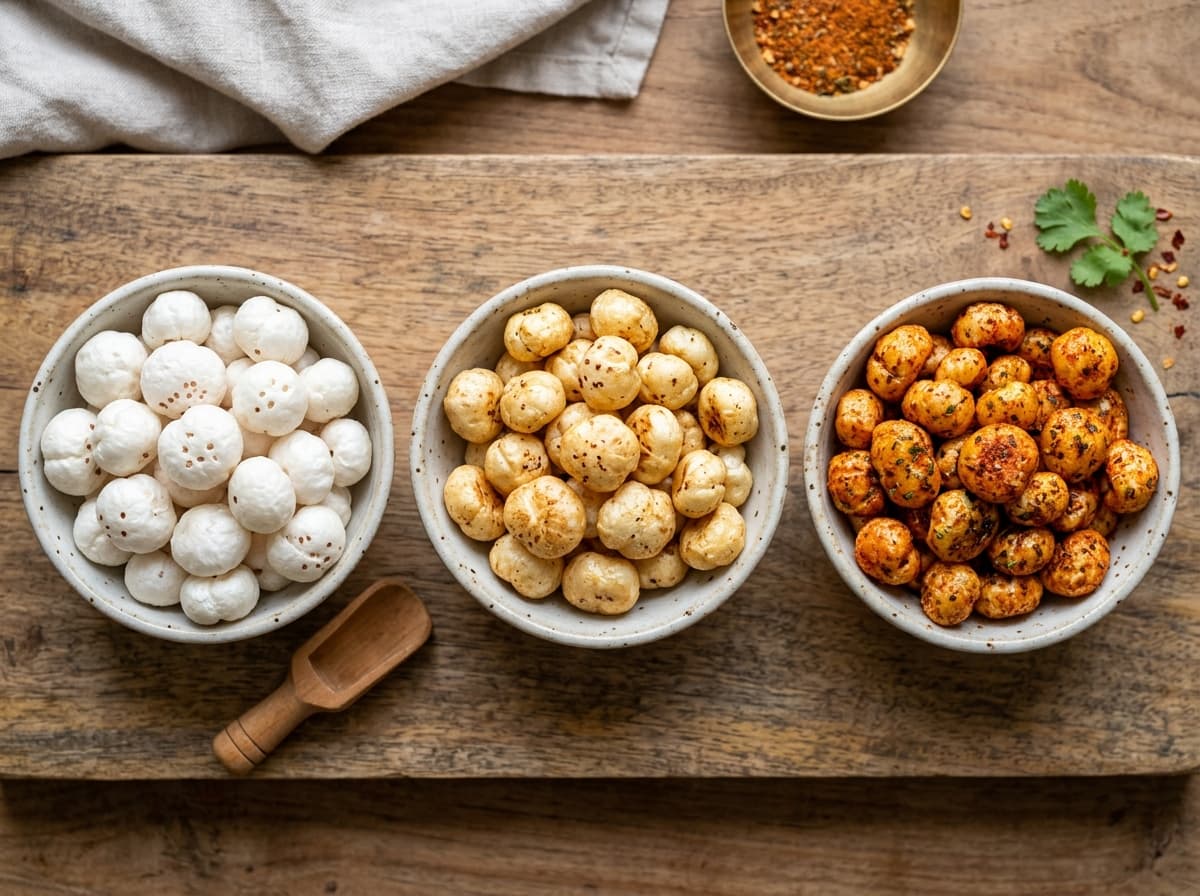
Ready-To-Eat Roasted & Seasoned
Value-added healthy superfood snacks slow-roasted in cold-pressed olive or coconut oil. Flavors include Himalayan Pink Salt, Peri-Peri, Mint & Lime, Cheese, and Barbecue.
Export Specifications Sheet
Every export consignment is tested and accompanied by NABL-accredited laboratory reports, phytosanitary certificates, and pre-dispatch inspection protocols.